


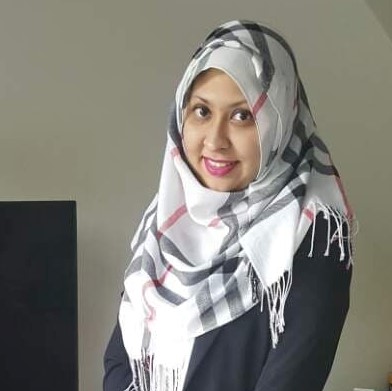
Rushdia Ahmed
Rushdia Ahmed
An aspiring global health and health systems researcher. Currently a doctoral student at the University of Toronto. I started my career as a trainee researcher in the Health Systems and Population Studies Division at icddr,b, an international health research institution based in Bangladesh, in 2013. In the following 5 years, as a research fellow (trainee position) and subsequently as a research investigator (2015 – 2018), I have worked in several projects aimed at ensuring equity, feasibility, and quality improvement for maternal, neonatal, and child health services in the urban and semi-urban areas of Bangladesh. Since mid of 2018, I collaborated with the Humanitarian Research Hub of BRAC James P Grant School of Public Health, and explored the sexual and reproductive health (SRH) services delivery for Rohingya refugee women and adolescent girls in 10 camps of Cox’s Bazar, Bangladesh. With funding support from the World Health Organization (Geneva, Switzerland) and the Health Sector Coordination Office (HSCO) of WHO based in Cox’s Bazar, we designed and implemented a comprehensive SRH service package that is culturally accepted, safe, and meaningful for a religiously conservative community like the Rohingya refugee population. During my Master’s in Health Policy and Equity at York University (2020), I employed a critical discourse analysis lens to understand the complex socio-political and policy discourses for reproductive health and rights of Canadian female refugees after their resettlement. For my PhD research, I am exploring the systemic and structural level barriers and risk factors related to African refugee women’s reproductive decision-making and autonomy, influenced by societal norms and power imbalances, and impacts of reproductive coercion on their health and wellbeing. This research has implications for health system leaders and policymakers, seeking to design culturally sensitive and trauma-informed interventions that best fit the reproductive health needs of refugee women in humanitarian settings.


