


We want you to trust the information you read on the Women’s Health Blog. That’s why we have multidisciplinary Expert Blog Reviewers that review each post to ensure our content is evidence based and meets our high standards of quality.
Emilie Theberge

Expertise: Women’s Mental Health
Emilie Théberge is a clinical research coordinator based out of Vancouver General Hospital, affiliated with the UBC Department of Medical Genetics and Division of Cardiology. She holds a Master’s of Science from UBC in Medical Genetics, where she studied sex differences in the polygenic risk of depression and shared associations with heart disease. She currently leads the research at the Women’s Heart Clinic under the supervision of cardiologist Dr. Tara Sedlak, and is involved in multiple rare genetic disease studies under the supervision of geneticist Dr. Anna Lehman: C4R-SOLVE, Silent Genomes: Precision Medicine (Activity 2), and the Canadian Fabry Disease Initiative. Her long-term goals are to be involved in research and structural initiatives that increase access to genetic testing for advancing precision health care diagnoses and medical management.
Tanisse Epp

Expertise: Substance Use Disorders
Tanisse is a Neuroscience Ph.D. student at Carleton University, studying under Dr. Kim Hellemans. She recently completed her Master of Science in Neuroscience at the University of British Columbia in 2023 and completed her Bachelor of Science in Honours Neuroscience and Mental Health at Carleton University in 2021. Her research interests include understanding the neural underpinnings of addiction and the impact of substance-related stigma. Her projects within the lab focus on finding neural markers of stigma using EEG. Find out more about Tanisse on her LinkedIn or X (@Tanisse Epp).
Jesse Lacasse

Expertise: Oral Contraceptives
Jesse Lacasse is a postdoctoral fellow under the supervision of Dr. Galea as well as Dr. Cheryl McCormick at Brock University. Jesse’s research focuses on investigating the effects of hormonal contraceptives on the female brain. His current project is focused on understanding how hormonal contraceptives may impact the brain differently when taken during adolescence versus in adulthood.
Danielle Perro

Expertise: Endometriosis, Chronic Pelvic Pain, Femtech, Reproductive Health
Dr. Danielle Perro completed her PhD in endometriosis and chronic pelvic pain at the University of Oxford. Danielle holds an Honours Bachelor of Interdisciplinary Medical Sciences degree from Western University. She currently works for the British Pregnancy Advisory Service, where she leads on strategic research planning and delivering high impact abortion research in the UK. Danielle previously worked as a Postdoctoral Researcher at the University of Oxford studying adolescent period pain, and has extensive science communication and research experience in the Femtech Industry. She has a wider interest in effective, impactful and accessible knowledge translation in the women’s health space.
Magdalena Martinez-Garcia

Expertise: Pregnancy, Parental Brain, Female Neuroendocrinology
Magdalena Martínez-García is a postdoctoral researcher in human neuroscience in the Jacobs lab at the University of California, Santa Barbara (UCSB). She holds a degree in Biotechnology by the Universidad Politécnica de Valencia (2015) and a master’s degree in Neuroscience by the Universitat de Barcelona (2016). She completed her PhD in Biomedical Science and Technology (Universidad Carlos III de Madrid) at the Group of Neuroimaging of the Instituto de Investigación Sanitaria Gregorio Marañón of Madrid (IISGM), supervised by Dr. Susana Carmona. As a neuroscientist, Magdalena specializes in the impact of major hormonal transitions on the structure and functioning of the female brain. Her research applies neuroimaging techniques to characterize the brain remodeling and neuroplasticity during pregnancy, childbirth, and postpartum periods and to determine the cellular substrate and hormonal and immune mediators of these cerebral adaptations. In 2020 she was awarded a Fulbright predoctoral grant to complete my PhD at the NEST lab at the University of Southern California of Los Angeles, California. At UCSB, she is committed to advancing the neuroscience of human pregnancy through the Ann S. Bowers Women’s Brain Health Initiative, a University of California-wide brain imaging consortium designed to accelerate the pace of discovery for women’s health.
Tetiana Povshedna

Expertise: Infectious Diseases, Healthy Aging, HIV in Women, Knowledge Translation
Tetiana Povshedna is a PhD Candidate in Pathology and Laboratory Medicine (Côté Lab). Her research with the British Columbia CARMA-CHIWOS Collaboration (BCC3; https://hivhearme.ca/) Study focuses on better understanding factors that affect aging in women living with HIV. Specifically, she is interested in how chronic/latent viral infections, inflammation, chronic pain, and cellular markers of aging relate to estimated risk of comorbidity development/progression and mortality. She is also interested in bridging the gap between research and community by communicating personalized research results back to the BCC3 study participants at Knowledge Mobilization events (with support from the UBC Public Scholarship Initiative and the Community-University Engagement Support (CUES) Fund).
Eden Hoffer

Expertise: Intimate Partner Violence, Trauma-informed Approaches, Social Services
Eden Hoffer is a PhD Candidate in the Faculty of Health Sciences and the Faculty of Information and Media Studies at Western University. Supervised by Dr. Nadine Wathen and Dr. Tara Mantler, Eden’s research explores how victim-survivors of intimate partner violence – particularly those who are mothers – navigate complex social service systems such as healthcare, child welfare, and the criminal legal system. She holds a B.A. (Hons.) and M.A. in Criminology and Social Justice from Toronto Metropolitan University, where her graduate work examined the seemingly unintended harms of mandatory charging policies on victim-survivors of intimate partner violence. Eden is committed to research that drives social change and informs Canadian policy and practice, with a focus on survivor-centred and trauma- and violence-informed approaches.
Ahmad Mohammad

Expertise: Metabolism, Alzheimer’s disease, Sex Differences, GLP-1, Estrogens
Ahmad Mohammad is a PhD student under the supervision of Dr. Liisa Galea at the Centre for Addiction and Mental Health. Ahmad’s research focuses on investigating the effects of dual hormone treatment (GLP-1 and estrogen) on Alzheimer’s disease progression. He has a wider interest in metabolism, women’s health, and sex differences as well as how these factors can work together to impact Alzheimer’s disease risk and progression.
Stephanie Awotwi-Pratt
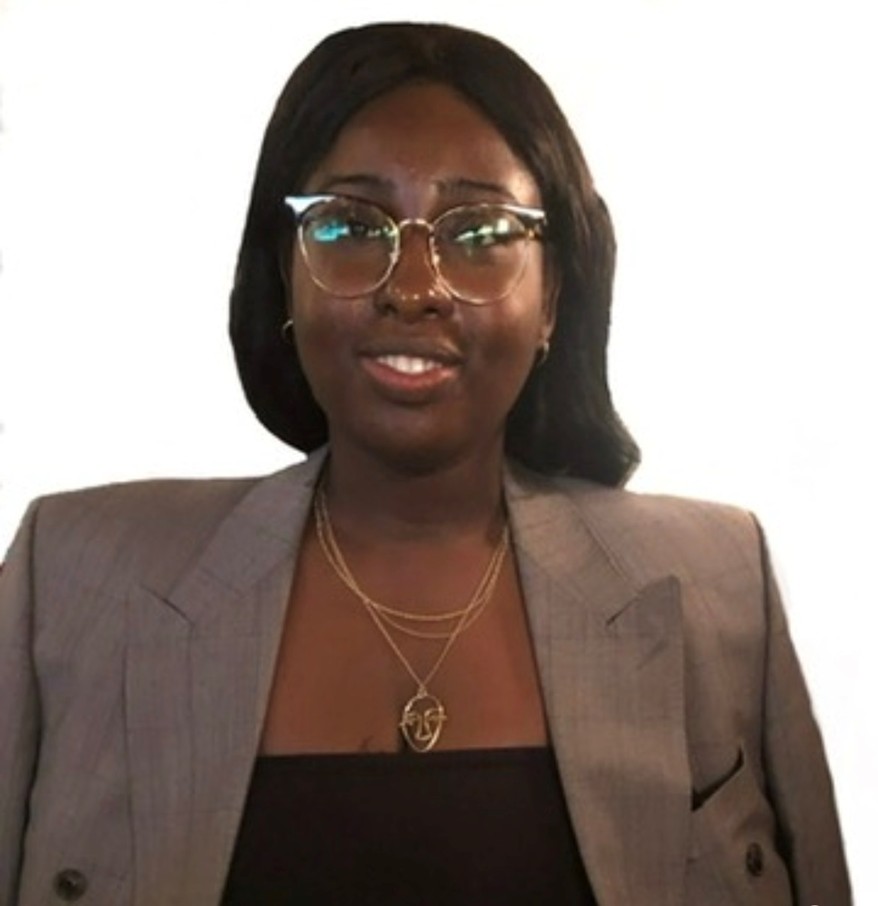
Expertise: Reproductive Healthcare in Canada and Reproductive Justice affecting Black women
Stephanie Awotwi-Pratt is a Master of Arts graduate at the University of British Columbia, Interdisciplinary Graduate Studies Program, with expertise in reproductive healthcare for Black Canadian women. Stephanie is a Social Science and Humanities Research Council award-winning researcher specializing in reproductive health equity with a focus on racism in the field of obstetrics and gynecology. Grounded in trauma-informed feminist methods, she centres Black women’s voices and understands how patients anticipate, resist, and navigate racism in Canadian reproductive healthcare contexts.
Stephanie advocates for the collection of race-based data in Canada and the provision of anti-racism training for healthcare providers. Stephanie’s work contributes to advancing reproductive justice and hopes in the future that disparities in obstetric care affecting Black women will be addressed by policymakers, healthcare providers, and lobbyists in Canada.
Julia Mazur

Expertise: Puberty, adolescence, pregnancy
Julia Mazur is a Master’s student under the supervision of Dr. Melissa Holmes at the University of Toronto. Her current research is primarily focused on how sex differences in stress pathways influence pubertal timing. In 2025, Julia completed her HBSc in Biomedical Sciences at Brock University, where she worked in the lab of Dr. Duarte-Guterman. Her previous research was focused on the impact of pregnancy and motherhood on cognitive aging. Find out more about Julia’s academic journey on her LinkedIn.
Halle Deakin

Expertise: Patient engagement, polycystic ovary syndrome, women’s health
Halle Deakin is an MSc student in Community Health Sciences at the University of Calgary, specializing in Epidemiology. She completed an Honours Bachelor of Medical Sciences at Western University with a specialization in Biochemistry and the Pathology of Human Disease and spent her spare time in student leadership roles and community volunteering. Her current thesis with the EMBRACE Women’s Health Research Lab examines engagement within the Polycystic Ovary Syndrome (PCOS) Patient Advisory Council, aiming to strengthen collaboration between people with lived experience and healthcare providers to improve understanding of PCOS and care outcomes. She is committed to addressing the historic under-research of female health by amplifying the perspectives of those with lived experience.
Harman Grewal

Expertise: relationship and gender equity, youth health, community-based research approaches.
Harman Grewal is research coordinator on the Relationship Equity and Intersectional Measurement Among Gender inclusive YouNg people in British Columbia study (RE-IMAGYN BC). RE-IMAGYN BC is a community-based research study that is grounded in the identities and experiences of queer and trans youth between the ages of 16 and 29 in BC, as it seeks to a) create a more inclusive, accurate, and comprehensive relationship equity measurement scale and b) explore how these youth’s health impacts and is impacted by their relationships.
Want to Become a Reviewer?
These volunteer positions serve a critical role on our blog team. Learn more about the position by reading our Reviewer Guidelines and Expectations. We welcome all trainees, faculty and professionals with adequate expertise to be a reviewer. To apply, email your CV, including relevant educational, work or volunteer experience, to our Blog Coordinators.
Newsletter Signup
Keep up to date with the Women’s Health Research Cluster
Click here to add your own text
