


Breaking the Stigma: Mental Health Medication During Pregnancy
Authors: Dr. Christina Cantin, Eliana Zhao, Oghosa Abajue, and Dr. Tina C. Montreuil, on behalf of the Perinatal Mental Health Working Group | Editors: Romina Garcia de leon and Tashi Stampp (blog coordinators) | Reviewers: Dr. Lila Amirali, Dr. Anna MacKinnon, Dr. Nichole Fairbrother | Graphics: Georgia Yee
Published: May 1st, 2026
*Note: We use women because researchers most often have done studies with women. However, it is our intention that this blog is inclusive of any individual who is/has been pregnant or given birth.
Abbreviations:
PMADs = perinatal mood and anxiety disorders
OCD = obsessive-compulsive disorder
Definitions:
Perinatal refers to the period from preconception to one year after birth.
The postpartum period refers to the time from birth until one year after birth.
Let’s Break the Stigma!
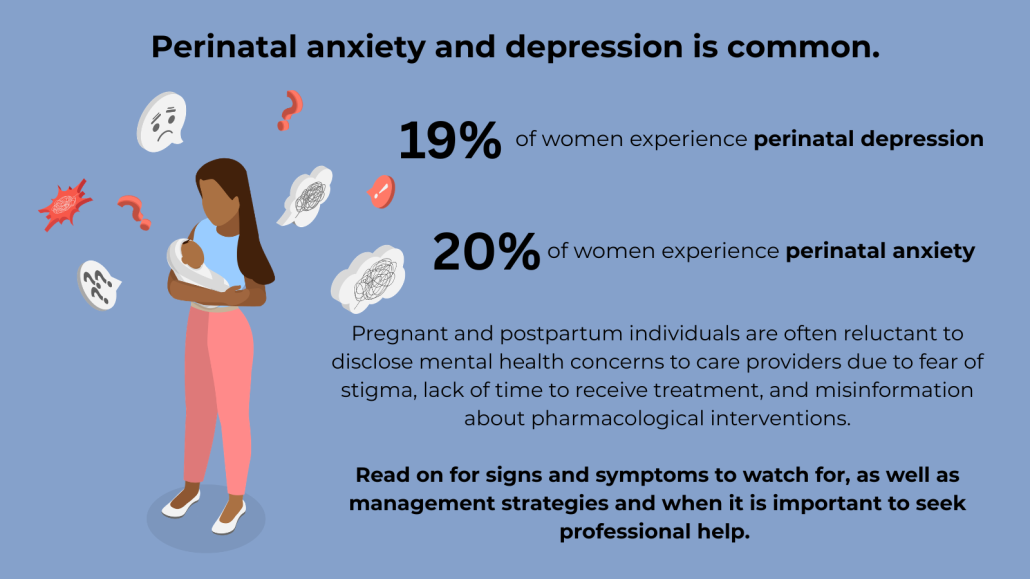
Did you know that perinatal mood and anxiety disorders (PMADs) are commonly experienced during pregnancy and the postpartum period? Research shows that approximately 19% of women experience perinatal depression and approximately 20% of women* experience perinatal anxiety worldwide with rates being higher among individuals from marginalized communities. These rates increase greatly when we consider the presence of some symptoms as opposed to meeting full diagnostic criteria.
Common risk factors for PMADs include a history of mental health symptoms and/or diagnoses, early childhood adversity, life stressors, limited social support, and pregnancy/birth complications.
Overcoming the Barriers
While barriers to diagnosing and treating PMADs currently exist at both an individual and systemic level, perinatal mental health should be considered a public health priority. Clinical studies demonstrate that early detection of PMADs and appropriate management can help to improve overall outcomes. Pregnant and postpartum individuals are often reluctant to disclose mental health concerns to care providers due to fear of stigma, lack of time to receive treatment and misinformation about pharmacological interventions.
The stigma of PMADs or concerns with medications can sometimes hold individuals back from getting the help they need. This blog walks through signs and symptoms to watch for, a variety of management strategies, and when it is important to seek professional help.
The Unspoken Risks of Untreated Perinatal Psychological Distress
PMADs can occur due to the physical, emotional and social changes that come with pregnancy and birth of a baby. The key is to be aware of symptoms like being very tired, sad, and worried, that continue beyond the first weeks after birth, and get help to support the best health outcomes for you and your baby.
Untreated depression during pregnancy has been linked to preterm birth, frequent infant crying, and long-term mental health challenges for children, and may also influence the development of the infant’s nervous system. Similarly, high levels of prolonged anxiety during pregnancy is associated with several adverse perinatal outcomes, including higher odds of preterm birth, lower birth weight, smaller head circumference, and earlier gestational age at delivery.
The impacts of untreated PMADs can extend beyond pregnancy and the early postpartum period. This includes the risk of poor mother-baby bond, impaired childhood development, changes in parent-infant interactions that can lead to child emotional and behavioral difficulties, including sleep and feeding problems, attention challenges, and delays in social or cognitive development.
The effects of PMADs can occur independently of ongoing parental depressive symptoms, emphasizing the importance of early identification and treatment to support both parental and child wellbeing. This is an important time to get the help to prevent PMADs from developing into a chronic disorder.
Over half (54%) of new parents experience thoughts of hurting their baby on purpose. When these thoughts are unwanted, intrusive and inconsistent with one’s values (i.e., you love your baby and want your baby to be safe), they are not associated with a risk of actually harming your baby. However, these thoughts can be distressing. For some people, these unwanted and intrusive thoughts may truly become obsessions like in obsessive-compulsive disorder (OCD). OCD is an anxiety condition that includes obsessions (repeated intrusive thoughts) and/or compulsions (things you do over and over again to feel better about the obsessions). There are very effective treatments for OCD. It’s important to know that some thoughts of harming your infant on purpose do increase the risk of harming your infant. Because of this, it’s important for individuals to have access to, and feel safe to discuss these thoughts with, a care provider.
The Benefits of Talk Therapy and Other Supports
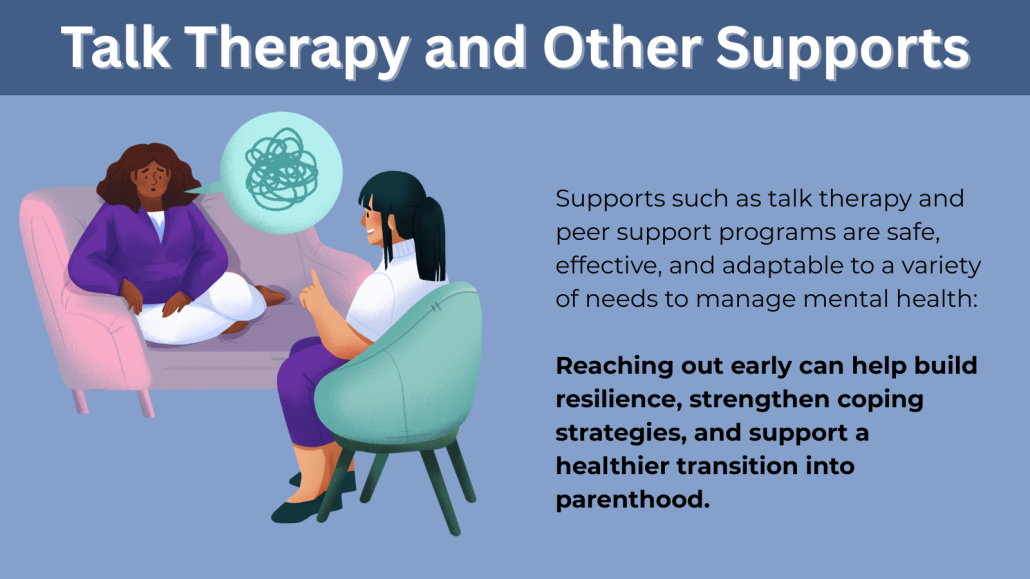
There are a range of possible interventions, which are outlined in the perinatal mental health care pathway. When it comes to managing PMADs, psychological therapies called “talk therapy” and peer support programs are evidence-based options. Talk therapy such as cognitive behavioural therapy (CBT), interpersonal psychotherapy (IPT), and mindfulness-based approaches have been shown to reduce symptoms of perinatal depression and anxiety, with benefits that often continue months after treatment ends. These approaches help individuals understand their thoughts and emotions during a time of significant physical and hormonal changes, and they provide practical strategies for coping with stress, mood shifts, or intrusive thoughts. Research also shows that therapy can play an important role in preventing symptoms from worsening and can support overall wellbeing throughout pregnancy and the postpartum period. Many people find that working with a therapist or participating in group-based programs reduces feelings of isolation, increases confidence, and improves communication within relationships. IPT can be especially helpful during the perinatal period because it focuses on navigating the challenges of becoming a parent, adjusting to new roles, and managing interpersonal stressors that frequently arise during this time.
Peer support programs, where individuals can share experiences in a safe and validating environment, have also been shown to lower symptoms of perinatal depression following participation. Digital mental health tools are becoming more accessible and offer more options for individuals who may find it difficult to attend in-person appointments. Internet-based CBT has been shown to reduce symptoms of perinatal anxiety and depression and can be a convenient resource for those needing flexible support. Social connection is important.
Whether through online platforms, individual or group formats, talk therapy and peer support interventions are safe, effective, and adaptable to a variety of needs. Reaching out early can help build resilience, strengthen coping strategies, and support a healthier transition into parenthood.
Making Decisions About Antidepressant Medications
In certain individuals, talk therapy does not suffice and antidepressant medications may be the appropriate next step. Specifically, when symptoms make day-to-day life difficult it is important to explore medications. If an individual is already taking medications, the continuation of medications may help prevent symptoms from coming back.
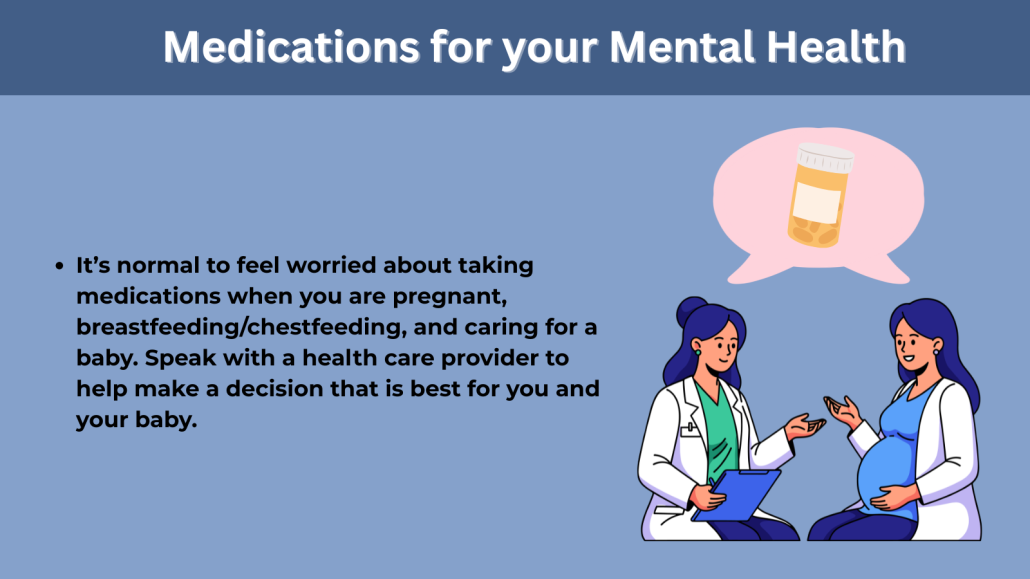
It’s normal to feel worried about taking medications when individuals are pregnant, breastfeeding/chestfeeding, and caring for a baby. When making decisions, there are several factors for individuals and their care providers to consider:
- PMADs that are not treated can have risks to the pregnant individual, the growing baby, and the infant.
- The most common medications used to treat PMADs have a very low risk for use in pregnancy and breastfeeding/chestfeeding.
- Previous and current experience using medications provides a lot of information.
- More severe mental health symptoms creates a greater risk of untreated or undertreated mental health disorders.
- Unique values and preferences are important to consider. Completing the antidepressant medication in pregnancy patient decision aid may be a helpful tool. Individuals can use this information when discussing a range of mental health intervention options with their care providers.
Some general practices for taking medications during pregnancy or breastfeeding/chestfeeding:
- Take a single medication to treat your mental health disorder, if this is possible
- Take the lowest amount (dose) of medication that helps to make your symptoms better.
- After you start a medication or increase the amount, give enough time to see if the medication is working for you
- If you have side effects that are not getting better, talk with your care provider about other medication options.
Here are some excellent resources to learn more information about using medications in pregnancy and the postpartum period:
- Healthy Pregnancy Hub
- Seeds of Hope: Nurturing Mental Health and Managing Perinatal Mood, Anxiety, and Related Disorders – Resources | CANMAT (see pages 37-42)
- Ask Masi – Prescribing
Here are some other excellent evidence-based resources that you might find useful
- First Exposure – Mental Health In Pregnancy and Lactation
- Postpartum Support International (PSI) – Medication Resources
- Life with a Baby Life With A Baby – Home
You Are Not Alone in Your Mental Health Journey
While being pregnant and becoming a new parent can be a busy phase of life, it is important to remember that by prioritizing and taking care of mental health needs will lead to the best pregnancy and postpartum outcomes for parent and child. When individuals experience persistent signs and symptoms of PMADs, reaching out to a care provider is a valuable way to not only improve the individual’s health, but the health of their baby as well. Early interventions lead to better outcomes later on. PMADs affect a lot of people worldwide. While mental health stigma exists, it can get in the way of getting the needed support. Reaching out to a trusted care provider with questions and concerns related to perinatal mental health management, and using trustworthy resources, is important to help navigate the perinatal journey.


