


Living in a Toxic World? What Science Says About Environmental Exposures and Women’s Reproductive Health
Author: Danika Paquette Rochette, PhD (student) in Population Health, The University of Ottawa | Editors: Tashi Stampp and Romina Garcia de leon (blog coordinators)
Published: March 20th, 2026
Considering that wildfires are becoming a part of our “new normal.” What does science actually say about wildfire exposure and women’s reproductive health?
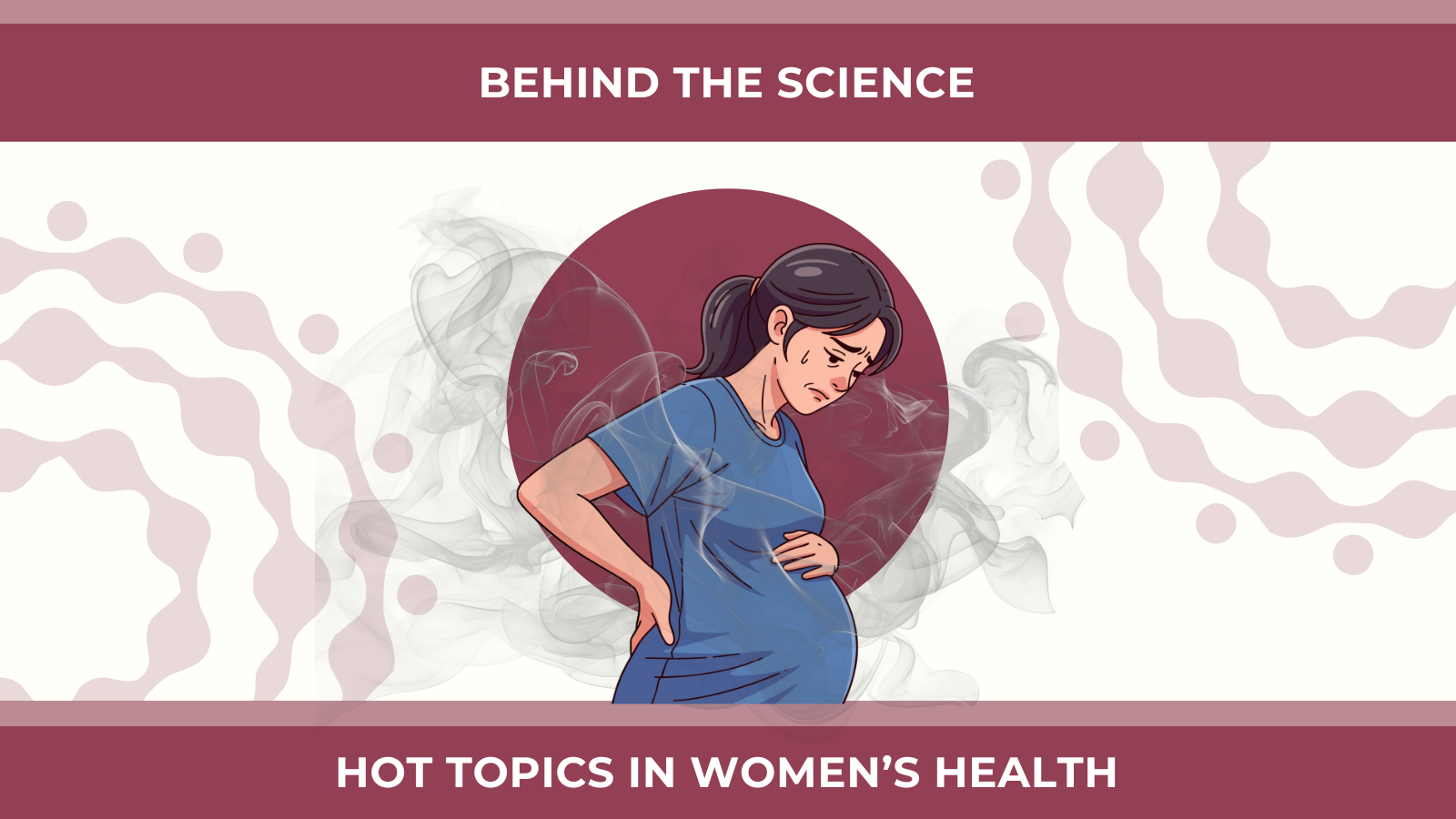
During wildfire events, pregnant women face an increased burden because their bodies are already working overtime to grow a baby, which makes them more sensitive to heat and smoke from a wildfire. Wildfire smoke contains tiny particles (PM2.5) that can penetrate the lungs and enter the bloodstream, causing inflammation throughout the body, which in turn affects the placenta, the organ that supplies the baby with oxygen and nutrients. As pregnancy is a critical time for fetal development, exposure to these particles may increase the risk of complications such as preterm birth, low birth weight, pre-eclampsia, hypertensive disorders, and miscarriage.
Are there specific life stages, from preconception or pregnancy, when exposure to wildfire smoke and pollutants is the most dangerous? What can women realistically do to mitigate risk or increase protection during these events?
Wildfire smoke and air pollutants may pose risks across multiple reproductive life stages. Exposure to air pollutants before conception has been linked to reduced fertility and negatively affects fetal development. Pregnancy, however, is a period where the risk is far greater. Evidence suggests that exposure to fine particulate matter (PM2.5) during the second trimester carries the highest risk of preterm birth. Research shows that even small increases in wildfire smoke were linked to about a 13% higher chance of giving birth prematurely.
While it may not be possible to completely avoid wildfire smoke, there are several steps to reduce exposure. Public health guidance recommends that pregnant women stay indoors as much as possible during periods of high smoke. Using a high-efficiency particulate air (HEPA) filtration system where available, can further reduce fine particles in indoor air. It is also helpful to keep windows and doors closed, and limit indoor sources of air pollution, such as candles and gas stoves. If going outside is unavoidable, wearing a properly fitted N95 respirator can significantly reduce the inhalation of fine particles. Monitoring tools such as the Air Quality Health Index and the WeatherCAN app can also support informed decisions about when it is safer to spend time participating in outdoor activities.
Since not all environmental toxins make headlines… What are some every day or overlooked exposures, at home, work or in our communities that could silently impact fertility or pregnancy ?
Many environmental factors that can impact fertility and pregnancy do not make headlines because they are low-level exposures that can be encountered in everyday life. One major category is endocrine-disrupting chemicals, which can act like hormones or block hormones, thereby interfering with the body’s normal reproductive signals. Some everyday life exposures include bisphenol A (BPA), which is found in the lining of canned foods, some plastics, and food packaging. Additionally, phthalates, which are found in some cosmetics soaps, and dioxins, which are produced by burning waste. In addition, triclosan, which is found in certain antibacterial ingredients in personal care products. Previous research has linked these endocrine chemical exposures to infertility, endometriosis, premature puberty, miscarriage, and other negative reproductive outcomes.
Beyond chemical exposures, extreme stress, for example, the aftermath of natural disasters, is another often overlooked risk to fertility. Stress can disrupt the body’s hormonal system, affecting ovulation and fertility even before months of conception. During pregnancy, high stress levels have been associated with an increased risk of complications, including preterm birth, high blood pressure, fetal growth restriction, and gestational diabetes. Together, these examples demonstrate how reproductive vulnerability can be influenced by the cumulative effect of everyday environmental and psychosocial stressors.
How can women advocate for their reproductive health when it comes to exposure to toxins? Also, where is science still falling short, especially for marginalized communities?
Women can advocate for their reproductive health by taking action at various levels. During antenatal appointments, this may include requesting screening or asking about climate-related risks or environmental toxin exposure. In the workplace, it can mean requesting access to hydration, rest breaks, or adjustments to their schedule, especially for those working outdoors or in non-air-conditioned settings.
While science has come a long way and the improvements are remarkable, it is important to recognize that there are still areas in which science falls short. The majority of research fails to adequately capture the cumulative effects of exposure or the vulnerabilities of marginalized communities. Including those who are low-income, racialized, rural, or migrant. Structural barriers, such as poor housing, job insecurity, lower socioeconomic levels, and limited access to healthcare, remain underexplored in reproductive and environmental health research.
Through your graduate research in Canada, what findings about environmental exposures and perinatal health outcomes surprised you the most? How did this change the way you think about women’s health in a climate that is “feverishly” changing?
Through my graduate research, the finding that surprised me most was not only the biological vulnerability of pregnancy to wildfire smoke and climate change, but also the gap between scientific evidence and clinical communication. While studies clearly link wildfire smoke exposure to adverse birth outcomes, many pregnant women report never receiving information about environmental health risks. Similarly, Canadian perinatal providers have described limited knowledge and low confidence in counselling patients about wildfire smoke exposure, climate change, and environmental exposure. This evidence led me to realize that vulnerability is not only biological, it is also systemic. Climate change is accelerating faster than our clinical education systems and public health messaging is adapting.

